The short verdict
“Sounds interesting, let's talk.” At that moment most companies start sending times by hand: offer three slots, the contact answers a day later, one is gone by then, offer again. Four messages and two days - exactly where interest dies.
Leeeds closes that stretch. With the booking goal the agent looks at the calendar, picks three genuinely free times, holds them and offers them. When the contact takes one, the event with its invitation is created once the reply has gone out, and the lead flips to “meeting booked”.
Why a time cannot be offered by guesswork
Offering a slot somebody has taken in the meantime is worse than offering none. So times are not derived from an assumption about your working hours but from real availability - and offered slots are held, so another contact in the same campaign does not get them ten minutes later.
The second trap is time itself. An hour's error across a daylight-saving change means two people turning up at different moments. Times are therefore computed against real timezone rules, and the contact sees the time in their own zone when it differs from yours.
The third is order. The event is created only after the reply confirming the time has actually gone out. Any earlier and a rejected draft would fill the diary with meetings nobody knows about.
What happens between the reply and the event
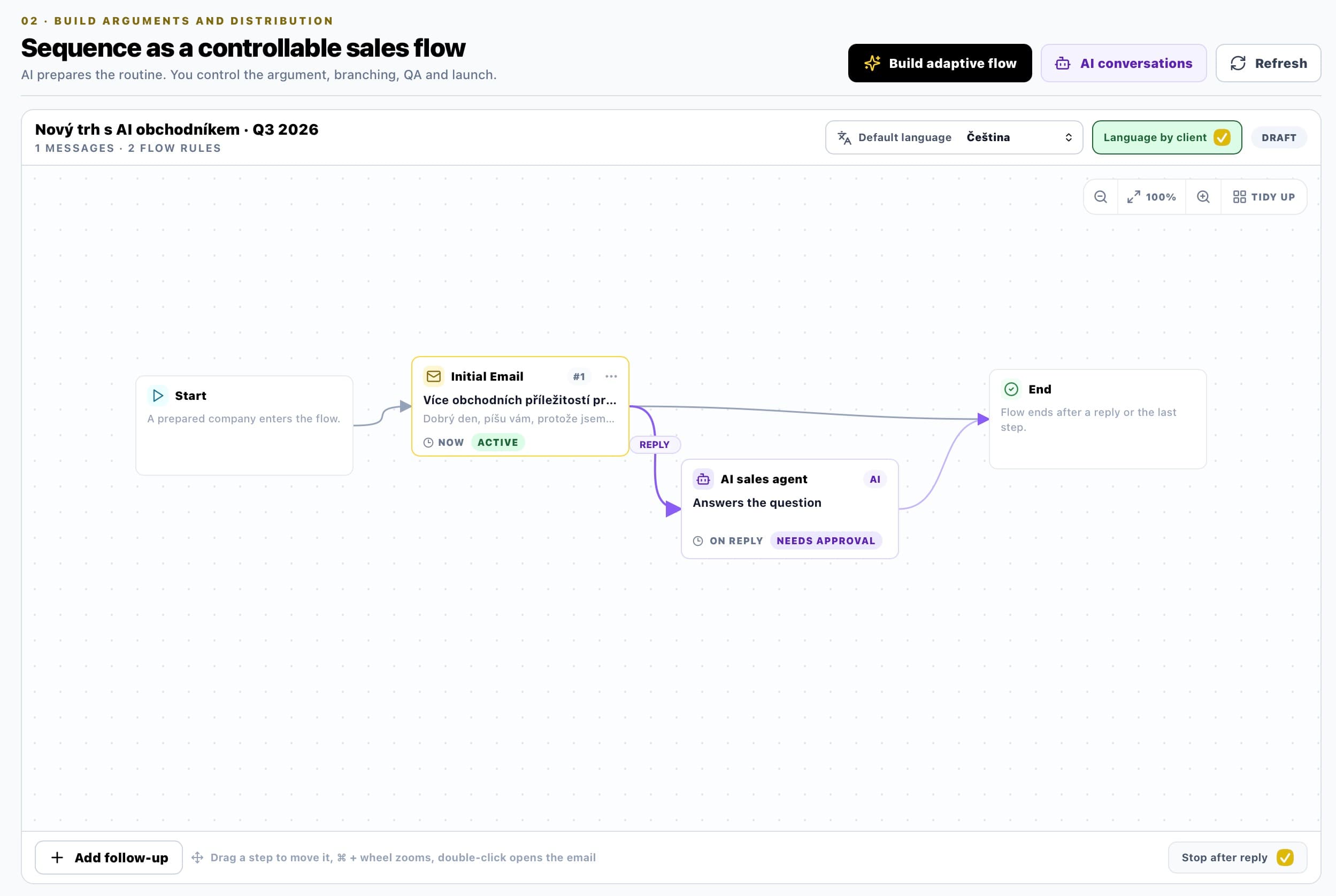
A reply arrived → compute free times → hold them → offer → on confirmation and send, create the event.
Times are computed, not estimated
Availability is read from the calendar - busy spans only, never the contents of your meetings. From that, your working hours, active days, meeting length and buffer, a list of possible times is built.
Three are offered, each on a different day
Three consecutive half hours on one morning is a single question wearing three hats. Times are spread across days; when only one day is free, the slots furthest apart are chosen.
Offered times are held
Every offered slot is reserved until the contact answers or the hold expires. Two contacts in the same campaign can never be offered the same Tuesday at ten.
An invented time is flagged
If the reply would state a time we never offered, that is flagged as a risk and the conversation goes to a human - exactly like an invented price. It is the mistake that ends with the contact sitting alone on a call.
The event follows the send
Only once the confirming reply has actually gone out is the event created with an invitation, the other slots released, and the lead flipped to “meeting booked” and marked hot.
Two ways to connect a calendar
Google or Microsoft. The agent sees real availability and creates the event and invitation directly in the calendar. It needs an OAuth app; for Google these are sensitive scopes, so expect a verification that takes weeks.
A subscription link, no OAuth. The client adds a private link to their own calendar app as a subscribed calendar and meetings arrive there on their own. Usable the same day. The limits are stated up front: in this mode Leeeds cannot see meetings agreed elsewhere, so it computes from working hours and its own bookings, and calendar apps fetch the link with a delay.
What you configure. Meeting length, buffer between events, how soon a slot may be, how far ahead to look, how many to offer and how long to hold them. Working hours and days belong to the calendar, not to a campaign.
Cancelling. A meeting can be cancelled from the company card in two clicks. The provider event is deleted first, so the contact gets the cancellation, and only then does Leeeds record it - in that order, so there is never a state of “cancelled here, still in the diary there”.
How it plays out in a real thread
The contact replies “let's talk”: the agent offers three times on different days and names the zone when it differs from theirs.
The contact picks Tuesday at ten: once the confirmation goes out the event is created and the other two slots are released.
The contact proposes a time of their own: the agent does not confirm it alone, it flags it and hands the conversation to you.
The calendar cannot be read: the agent offers no time at all, asks for one in words, and the draft shows why.
You cancel from the company card: the event disappears from the contact's calendar, the slot returns to the pool, and the company goes back from “meeting” to “interested”.
Why it is built this way
A shorter path
01Reply straight to a slot
Four messages and two days of cooling interest simply disappear.
No double booking
02Offered means held
Two contacts in one campaign are never given the same time.
No waiting on Google
03Link works today
The second route starts the same day while OAuth verification runs.
What to take from this
A meeting is the one number a business owner watches. The difference between “the agent replied” and “the meeting is in the diary” is a few hundred lines of calendar code - and four emails nobody has to write.
If you would rather not wait for OAuth approval, start with the subscription link. You know the limits up front and you can switch over whenever you like.
Keep reading
These related pages connect the strategy, compliance and real workflow behind Leeeds.
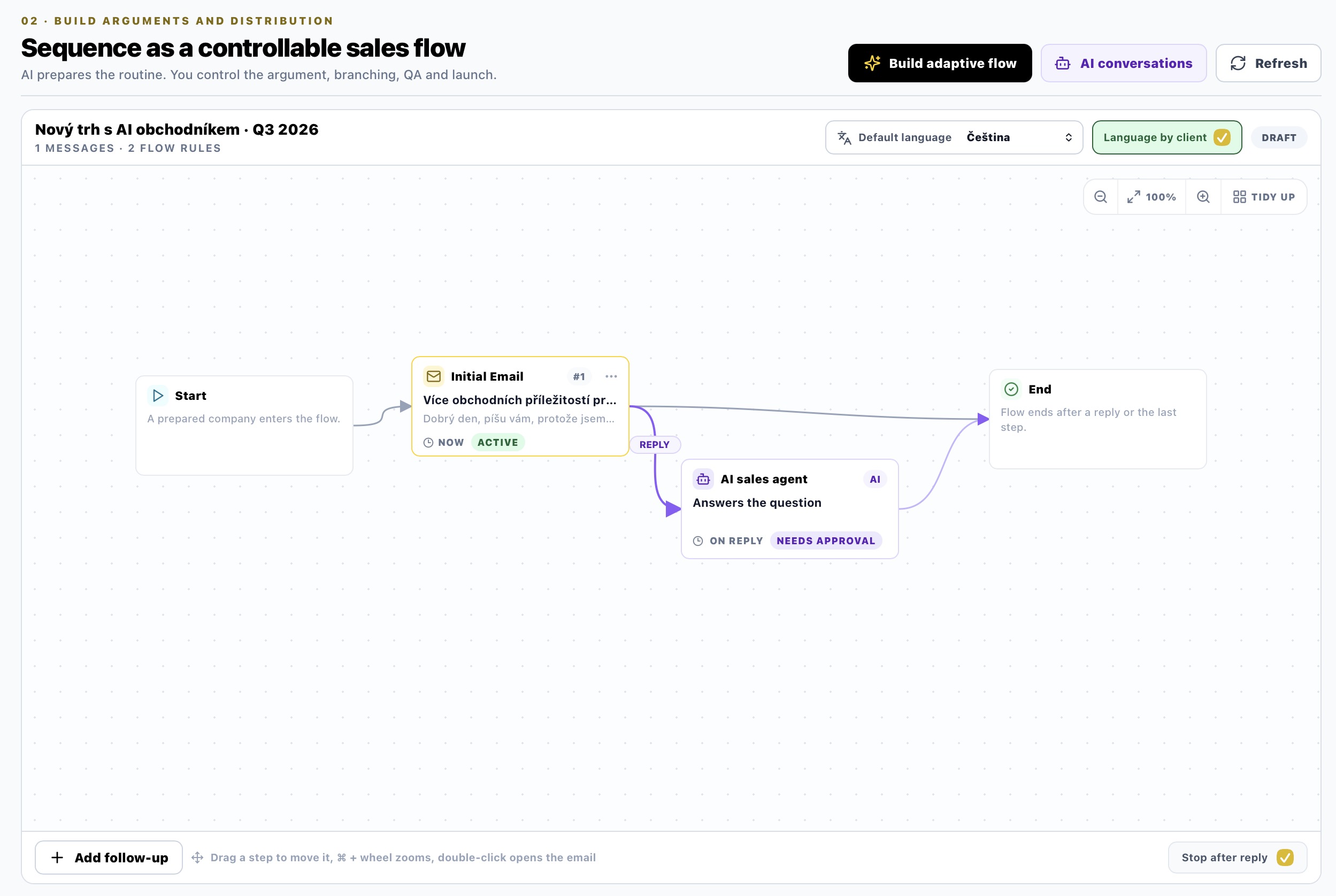
AI sales agent
How the AI sales agent works
The Leeeds AI sales agent sits on one sequence step, fires only when a contact replies, answers from your own material and waits for your approval. With screenshots.
Read next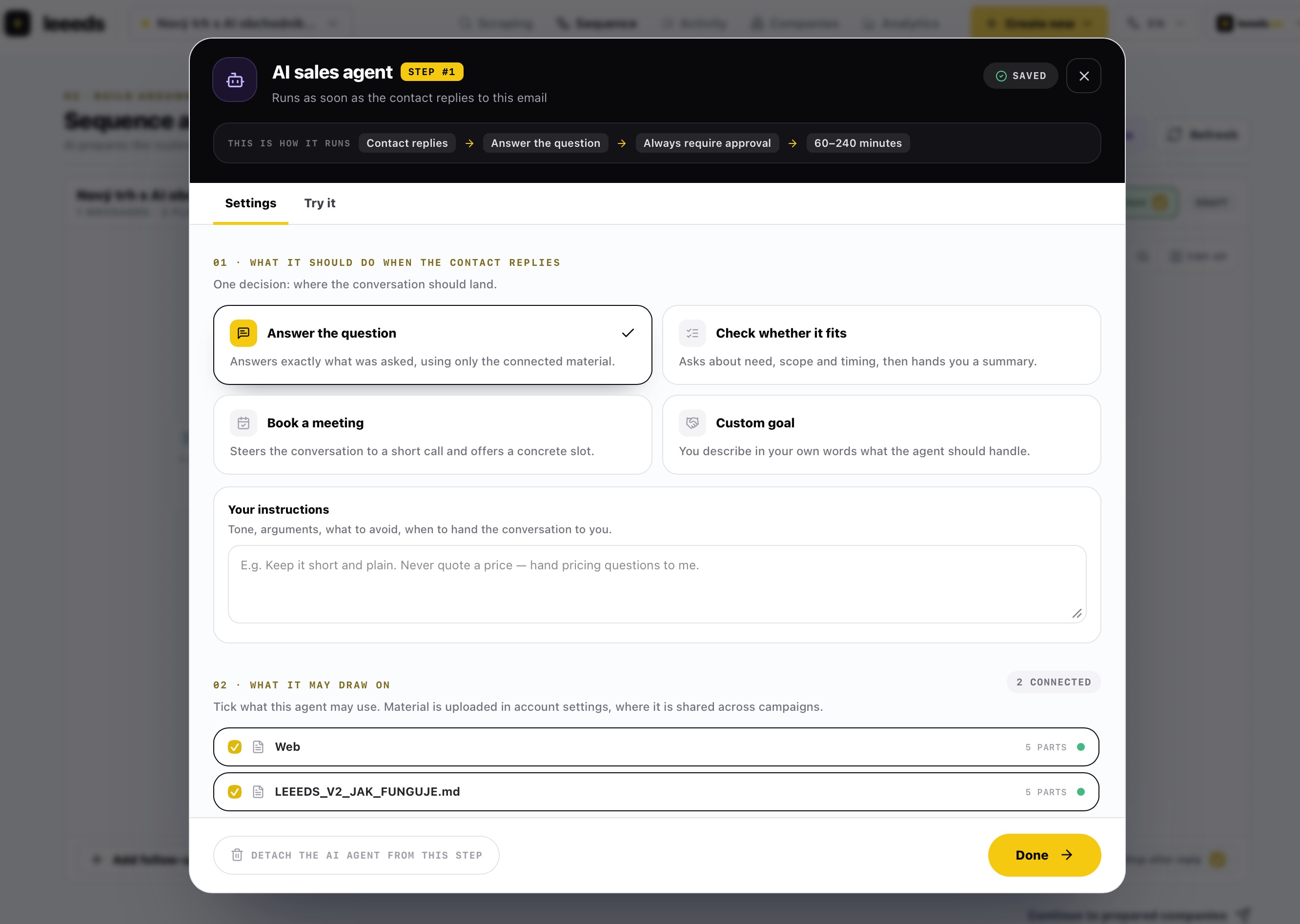
AI sales agent
How the agent handles numbers
Most AI tools either invent a price or dodge the question. Leeeds stores it as a fact with an expiry date: the agent repeats it exactly, shows the source, and stops saying it the day it expires.
Read nextAI sales agent
What people ask you
Leeeds records what was missing on every draft. That becomes a ranked list of the questions your market actually asks - and one click turns a question into material.
Read nextAI sales agent
Agent for inbound questions
On your site and in info@ sit people who are already interested. Leeeds answers them from the same material and facts as in a campaign - and invents nothing it cannot back.
Read nextWant meetings out of replies, not more emails?
Connect a calendar and the agent offers only times that are genuinely free.
I want the AI agentLeeeds · acquisition automation with an AI sales agent