
Quick verdict
GDPR does not end B2B acquisition. It ends lazy data collection without purpose, transparency or respect for the recipient.
A strong process means you know who you are looking for, why the outreach is relevant, where the contact came from and what happened to the data afterwards. If an email address identifies a person, treat it as personal data.
The biggest risk is not the email itself. It is an uncontrolled process.
Many lead-gen tools were built outside Europe and start from a database mindset: more profiles, faster exports and more sequences. That can create volume, but it does not solve data origin, local expectations or the controller's proof burden.
GDPR fines can reach up to EUR 20 million or 4% of annual worldwide turnover. The more common practical cost is complaints, weaker sender reputation, market distrust and a CRM full of contacts whose origin nobody can explain.
7 steps to GDPR-compliant lead generation
When outbound is treated as a controlled sales process instead of random scraping, GDPR turns into a practical checklist for your team and vendors.
Define the segment and purpose
Do not start with every director in a city. Start with why the segment makes business sense, what problem you solve and why the outreach is relevant.
Use traceable sources
Prefer company websites, public registers, directories, map services and official tender systems. Each contact should have a clear origin.
Use legitimate interest carefully
Legitimate interest can be relevant in B2B, but it must fit the situation. Narrow segmentation, data minimization and an internal balancing test help.
Be transparent in the first email
The recipient should know who contacted them, why, roughly where the data came from and how to refuse further communication.
Review AI personalization
AI must not invent facts. Every icebreaker should be grounded in traceable context, and weak drafts should wait for human review.
Respect opt-out immediately
Opt-out must be simple and functional, and the system must add the contact to a blacklist so they do not return to another campaign.
Keep an audit trail
Log source, edits, approvals, sends, replies and CRM syncs. Without audit evidence, a good process is hard to prove.
How Leeeds handles this
Leeeds was not designed as a US-style database with a GDPR banner attached later. The platform logic follows European outbound: relevant segment, public sources, quality checks, approvals and audit.
Contacts are created for a specific mission from traceable sources, drafts go through AI and human control, and important actions are logged. CRM receives a sales-ready opportunity with context, not an anonymous data dump.
What to check in a vendor
Can the vendor explain the source of a contact, not just the number of profiles in a database?
Does the workflow cover opt-out, blacklist and deletion across campaigns?
Are AI outputs reviewed before sending, or does personalization run blind?
Are edits, approvals, sends and CRM syncs logged in a way you can prove later?
What a safe process delivers
Confidence
01Traceable data origin
The team knows where a contact came from and why it entered the campaign.
Reputation
02Fewer complaints
Relevant targeting, fair opt-out and reviewed copy protect the brand and sender domains.
Growth
03Acquisition without chaos
Sales receives prepared opportunities instead of an unverified export.
Safety and growth can work together
GDPR is not a brake on sales. It is a framework that pushes outbound toward better targeting, less unnecessary data and more respect for the recipient.
Teams that understand this do not lose speed. They earn trust and build acquisition on quality instead of legal grey zones.
Keep reading
These related pages connect the strategy, compliance and real workflow behind Leeeds.
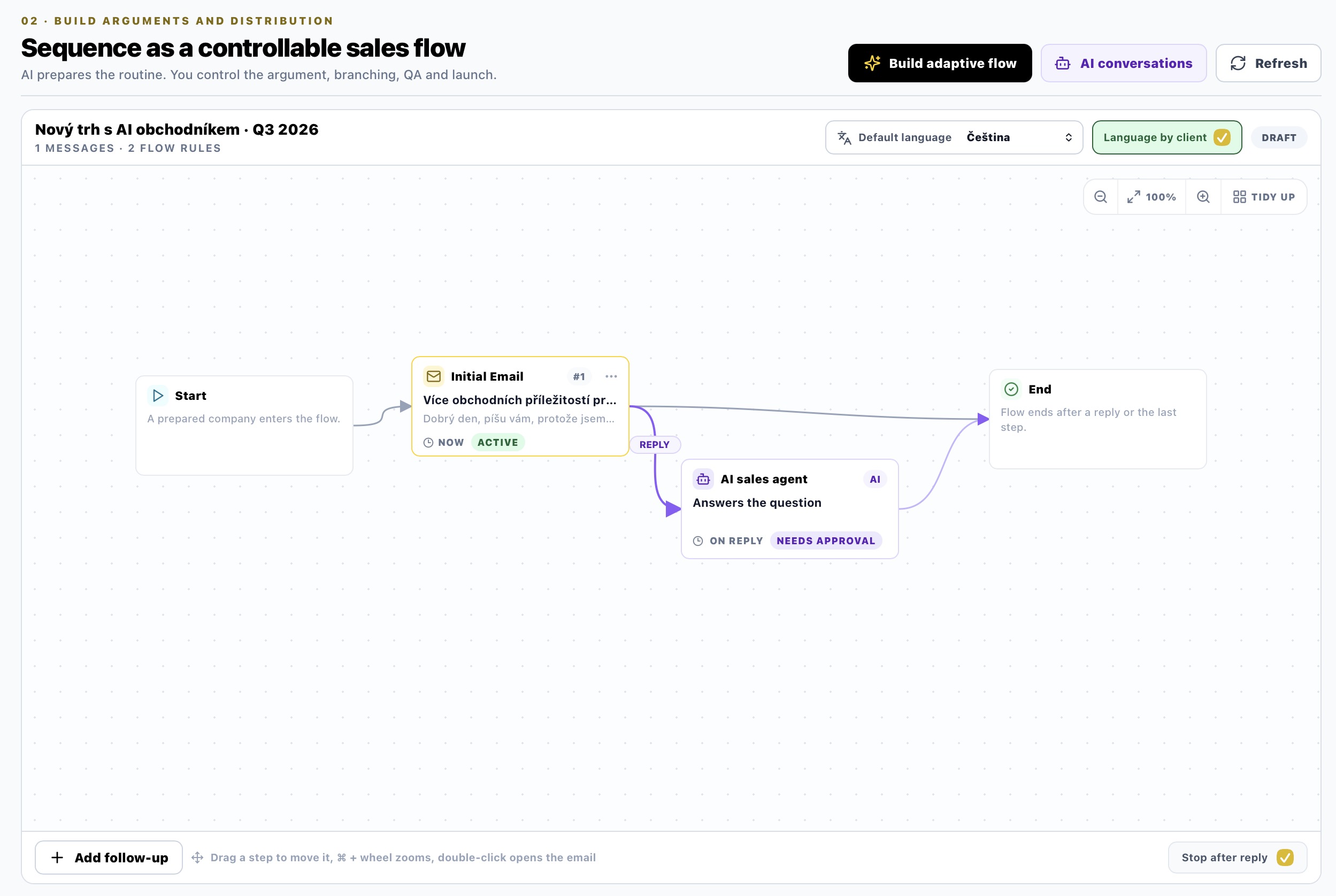
AI sales agent
How the AI sales agent works
The Leeeds AI sales agent sits on one sequence step, fires only when a contact replies, answers from your own material and waits for your approval. With screenshots.
Read next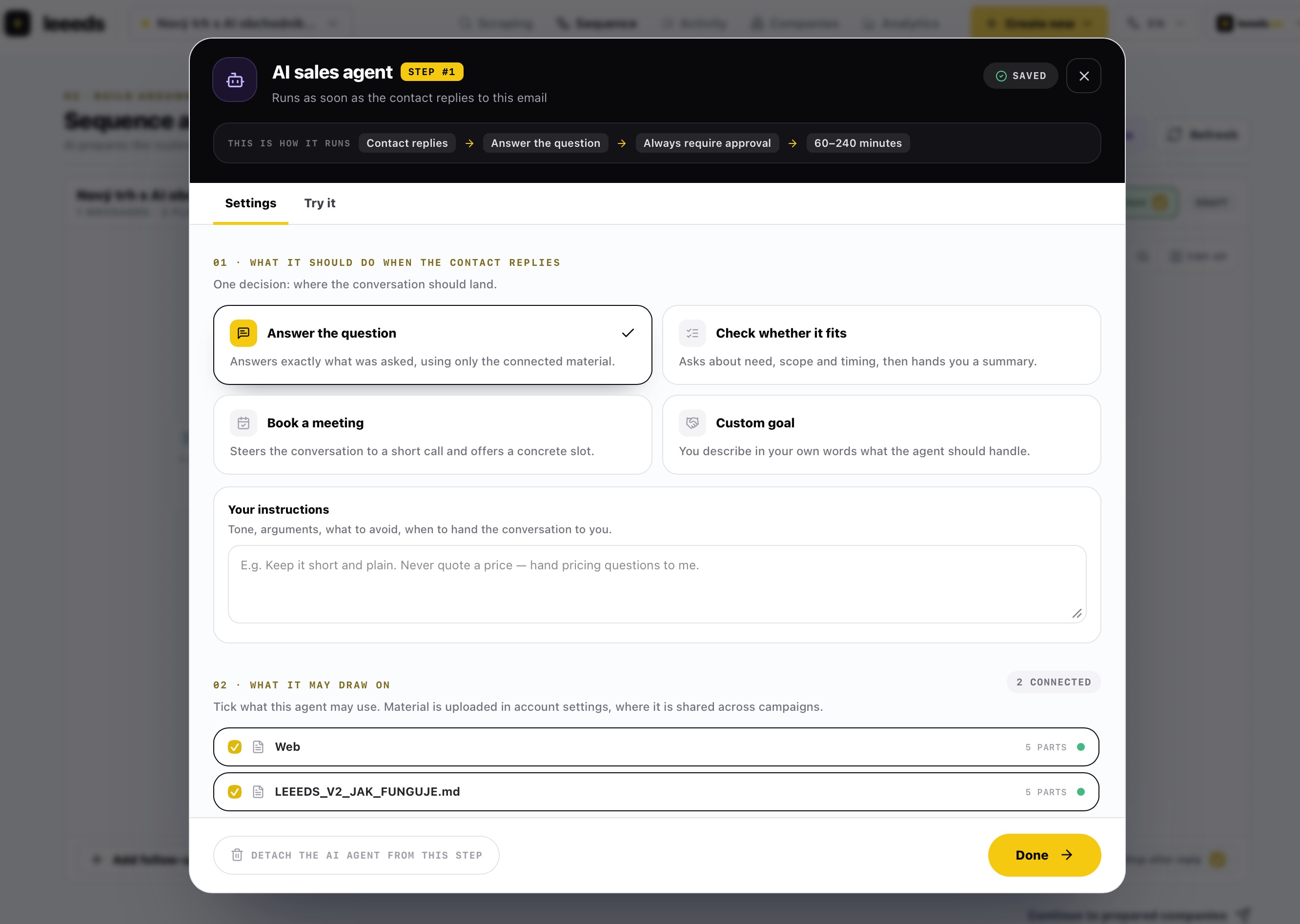
AI sales agent
How the agent handles numbers
Most AI tools either invent a price or dodge the question. Leeeds stores it as a fact with an expiry date: the agent repeats it exactly, shows the source, and stops saying it the day it expires.
Read nextAI sales agent
How a meeting happens
Agreeing a meeting by email takes four extra messages and two days. Leeeds offers three genuinely free times, holds them, and creates the event with an invitation once confirmed.
Read nextAI sales agent
What people ask you
Leeeds records what was missing on every draft. That becomes a ranked list of the questions your market actually asks - and one click turns a question into material.
Read nextWant lead generation you can stand behind?
Start your first mission with 20 free contacts and see how contact sourcing, AI personalization, quality review and sales handoff can work in a European workflow.
Start first missionThis guide is informational content, not legal advice. Validate your process with counsel for your market, segment and internal policy.